Futureday
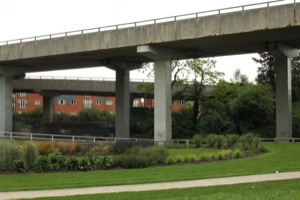
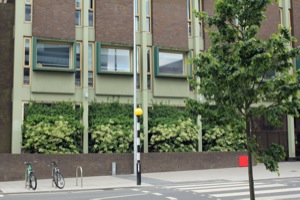
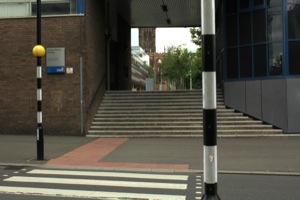
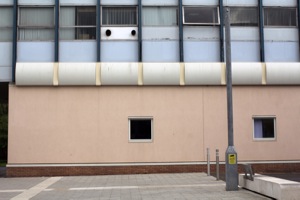
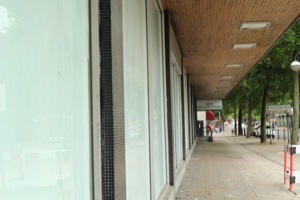
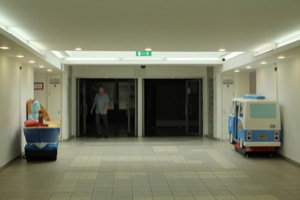
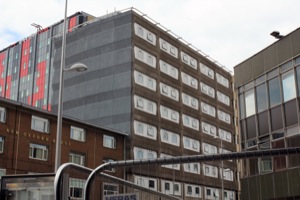
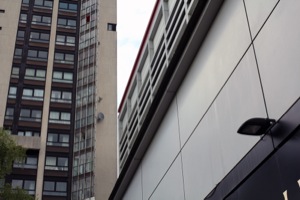
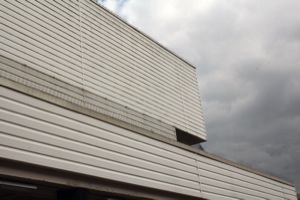
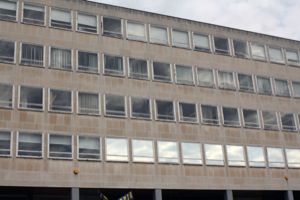
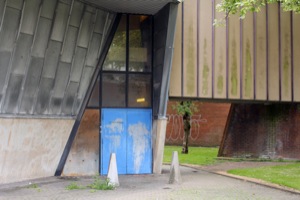
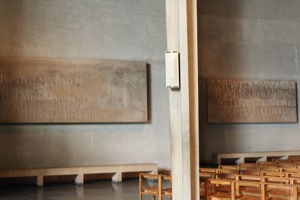
Yesterday I visited Coventry for ‘Future day’ as part of the City Arcadia project. City Arcadia is an art project/series of commissions responding to the past, present and imagined future of Coventry. Future day was a meet up and getting to know the city event, for artists (including me) who have made ‘propositions’ to be part of the project.
It was fab to meet Laura Elliot and Michael Mayhew – who run the project – plus some of the other artists who have put in proposals. The structure of the day made a nice change from familiar commissioning processes where you make a proposal and then get either a definite ‘yes’ or ‘no’ on whether it can go ahead. City Arcadia would like, in theory, to work with all the artists they invited to the day. So, funding and practicalities permitting, I hope that I will be able to go back there soon to work on a project with them. I’ll post more about my idea if it does go ahead. In the meantime here’s a few snaps that I took of Coventry, it was enjoyable to explore the city.
Love letters – The Cloud Collector
To continue an intermittent series of blog posts about artworks I love, I want to talk about The Cloud Collector by Lisa Stansbie. It occurred to me that my first two posts are both about artworks that are very verbal. The Black Tower and Let Me Take You There both have spoken monologue soundtracks that are core to their structure and how they convey meaning. Yet both films depend on a visual image or motif as a central element (a photo of a field in Rooney’s work, the recurrent black tower in Smith’s). To diverge briefly, this also makes me recall another film – Rules of the Road, by Su Friedrich – which tells a story of a relationship break up by way of recurrent sightings of of a brown oldsmobile car. I loved this work too, but alas have only seen it once in the distant past and so I probably can’t write about it in a coherent way.
For now, I want to talk about Stansbie’s work. ‘The Cloud Collector’ is similar to the above in its use of a simple visual image track, combined with a monologue voice over. But the weighting between word and image is shifted slightly. The soundtrack is structured around titles for the top 10 best selling novels of the 1950s. Elusive titles, such as ‘The Adventurer’ and ‘Across the river and into the trees,’ have been used as the basis to write a short narrative about a character called ‘The Cardinal.’ At first it seems that the images – a series aeroplane jet streams in a blue sky – act primarily as a holding mechanism, keeping the viewer’s attention as they listen to the winding narrative. But as I listen I realise that these photos have an impact on how I make sense of the story.
I love the work firstly because of its nice turns of phrase. The ‘poetry’ of the book titles seeps into the manner of the narratives telling. For example the video begins: ‘Delivering the news to those who still required it in paper form, he rode his rusted BMX along Joy Street each morning.’ I found myself enamoured by the language, the tone of the voice on the soundtrack and its pacing. I had to watch the video through a few times to work out what the Cardinal’s story actually is. The Cardinal, we are told, is a collector. He looks up at the sky and he has a camera. The soundtrack, the work’s title and the images collude to suggest a tale of a man who photographs jet streams. The project begins with a list of titles and a challenge for the artist to build these into a story. It ends with a densely packed video piece where word and image playfully combine.
I don’t know why Stansbie chose to use 50s novel titles in the production of this piece. The video is one of a series of pieces in which she used lists of words as the basis for writing stories. Other instances have included the names of racehorses and Airfix aeroplane kit names. My interpretation would be that it’s perhaps something to do with the nature of information in our contemporary internet-drenched world (and as I type this I am dimly recalling another work exhibited alongside the Cloud Collector that I think was to do with the associative nature of hyperlinks). Certainly there’s something appealing to me about an artwork that takes a series of words and uses it to generate something new. It produces one story out of a series of endless possible stories and then shapes this into something quite formally tight, neat and satisfying.
Lists, collections and artworks are all ways to delimit and to organise the mass of stuff that we encounter in the world.
Christian Marclay – the good and the bad
 Christian Marclay’s new video installation ‘Pub Crawl,’ currently being exhibited at White Cube, Bermondsy, is brilliant. Unfortunately the new paintings he’s exhibiting as part of the same exhibition are not. They have no nuance, they go through the motions of being paintings but evoke not very much. Words depicted in each of the paintings relate to liquid (splatting, glooping and plopping). ‘Liquid’ – along with the relationship between sound and image or sound and physical form – provides a conceptual continuity throughout the exhibition and the gallery hand out explains that these particular ‘liquid’ words refer to the act of painting, to what paint does. But these are not sploshy, oozy paintings. They are slick surfaces that, for me, have no charm.
Maybe my encounter with them suffered for going to see exhibitions by Marlene Dumas and Sigmar Polke on the same day. These artists both have a much better grasp of painting both compositionally and in their tactile treatment of paint (although to be fair in the converse, I didn’t think Polke’s films were much good). The surface quality and use of words in Marclay’s work is perhaps more akin to Ed Ruscha’s paintings. But Ruscha’s works have strong verbal quality – they trip off the tongue – where Marclay’s words don’t. I can’t help thinking Marclay was probably cajoled into making his paintings to have something big and shiny to sell.
The rest of the exhibition is great and ‘Pub Crawl’ – fun and perplexing – was my favourite. 11 projections run the length of the gallery’s central corridor, projected at floor level so that as you walk between them the shadow of your legs also become part of the piece. Each projection shows a hand-held camera shot as its protagonist (the artist I presume) walks the streets of London. Each time he come across an empty bottle or glass, in the the gutter or propped on a wall, he reaches into shot and taps it or kicks it. The piece is reminiscent of a single-screen work ‘Railings’ by Francis Alÿs where he walks around London playing railings with a stick. But Marclay’s work becomes more complex in its use of multiple projections. The screens are choreographed so that the taps and the kicks add up to a musical composition. As I watch I wonder how the piece was composed; how planned and how random. This conundrum becomes part of the work’s appeal.
Another series of works, each titled after a drinking song, includes the musical score for said song framed behind bullseye glass. Bullseye glass (the cheaper cuts of blown glass which have a circle in them where the glass blowing implement met the blown plate) is often seen in old pub windows. Here the effect is to warp the scores behind them like a funny mirror, so they appeared as if you were looking at them with a booze sozzled brain. I found this amusing. Plus the bullseye shape in the glass had a nice visual resonance with the stack of records being made by a vinyl pressing machine in the same room.
Throughout the duration of the exhibition a series of musical performances are happening in the gallery and being written live to vinyl. Then they are being pressed as multiples with screen printed covers, also made in the gallery, and sold. This is a much better way of making something sale-able. It’s a project that coheres with the exhibition as a whole and demonstrates Marclay as a continually engaging artist trying new approaches. I won’t get to see any of these performances, but I think they give another dimension to the exhibition and – unlike the unfortunate, staid paintings – activate the gallery in a more unusual way.
The Artwork as Misunderstanding
In the current exhibition of Marlene Dumas’ work at Tate Modern – The Image as Burden – quotes from the artist are pasted around the walls alongside her paintings. This one struck me particularly:
There is a crisis with regard to Representation.
They are looking for Meaning as if it was a thing.
As if it was a girl, required to take her panties off
as if she would want to do so, as soon as
the true interpreter comes along.
As if there was something to take off.
Marlene Dumas The Artwork as Misunderstanding 1991