Love Letters – Let Me Take You There
I like to think that someone, perhaps a number of people, have traveled to the field in Calderdale central to Paul Rooney’s ‘Let Me Take You There – A guide for a field in Calderdale.’ The piece starts with instructions on how to get to the field and the work was exhibited in Artranspennin03, so presumably this live mode of viewing was encouraged during that exhibition. However I saw the work at Site Gallery in 2004 as part of a joint exhibition of work by Paul Rooney and Susan Phillipsz. Since then I have also listened to it online. You can access it through the Artranspennine03 website.
To my mind it is successful as an artwork where you travel only in your imagination to the snowy field depicted in the work’s only image. This image is paired with a monologue audio piece, listened to through headphones. The audio loops and diverges to cover numerous topics, but always returning to the field and its image. It gives a detailed description of the photographer Charlie Meecham taking the featured photograph, as recorded by a Granada TV documentary, and conveys a strong sense of both the cold, crisp day and the process of choosing and framing a section of the landscape to depict.
I love the idea of creating an audio guide for a field. It’s a place that, notwithstanding the location of of the battle of Culloden (where I know you can listen to an audio guide), is unlikely to be a tourist attraction. This field is one of many in the Yorkshire/Lancashire hinterland, general and yet – as we hear here – specific. We are told that Meecham’s image was used on the cover of an album by the band Joy Division and about poems by Ted Hughes and Sylvia Plath written in this locality, evocative of its atmosphere.
I enjoy the sense of there being a logic to this artwork, a kind of puzzle to how the disparate stories are connected but one that I can’t quite keep up with. As well as referencing events directly linked to the field and its image, the narrative uses leaps of association. The snowy scene reminds the narrator of a diary entry about Trotsky’s last train journey; the photographer’s blanket recalls a blanket used by a singer at a gig (by Paul Rooney’s erstwhile band ‘Rooney’) who shouts out words to a Russ Abbot song ‘Atmosphere.’ Snow is compared to the icy sound of synthesizers on a particular Joy Division track or to to white sheets of Sylvia Plath’s hospital bed.
We are told at the start of the guide that some of its themes are: winter, the photographed moment – it’s frozen time, and the rebirth of spring. This along with the theme of atmosphere, gives a tenor to all the stories and how they are told. I like the detail, the texture of the telling. It’s at once quite a sad work, where we are repeatedly reminded of death by war and by suicide, and an optimistic one that describes creative ventures – a band, songs, poems, photographs – that can come from small beginnings to give substance and meaning to many people’s lives.
Good Teeth
 Last week I went to a talk in Leeds as part of a series based around items in Special Collections at the Brotherton Library. Entitled ‘Dialect in the Museum‘ the talk involved Dr Fiona Douglas from The University of Leeds English Department telling us firstly about the scope of the libraries Archive of Vernacular Culture and secondly talking about a project with her students to embed materials related to the Yorkshire dialect in 3 museums around Yorkshire. Shibden Hall, Rydale Folk Museum and the Dales Countryside Museum all house material objects from rural Yorkshire that tell the story of a way of life that has become partially obsolete. The project aims to preserve language contemporary to the objects alongside them.
A large part of the Archive of Vernacular Culture pertains to the Survey of English Dialects. This was a nationwide survey of the vernacular speech of England, undertaken by researchers based at the University of Leeds from 1950 to 1961. I was interested to hear that the first interviews undertaken as part of the survey were not audio recorded (as recording equipment would have been cumbersome and impractical at that time) but written down in the international phonetic alphabet. Researchers would also draw pictures in their notes if they did not have a word for the item being described. I think there’s a kernel of something interesting here (a possible art project?!) as regards to the relationship between objects, words and pictures.
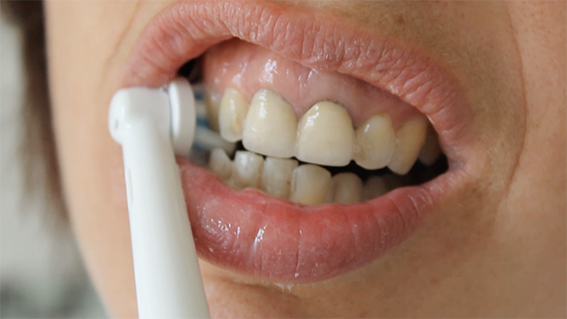
My favourite fact from the talk was that, when selecting subjects for the survey, the ideal candidate was an older man with good teeth. Apparently men typically adapt their manner of speaking less readily to the influences around them than women. Older men would take the researchers as far back as possible in terms of past dialects and, well, the good teeth part is obvious. Gaps and gums would not influence their pronunciation.
Found poem
Found on Monday 9 January 2015 on the 22:56 Leeds to Skipton train.
Please keep your feet off the seats.
Putting your feet on train seats
is a habit that other customers
find particularly annoying.
This is what some of them said:
Dirty, inconsiderate, anti-social,
unacceptable.
Please show consideration
for your fellow customers and
respect for train seats.
Thank you.
Love Letters – The Black Tower
I am keen on a lot of films by John Smith, but my favourite is ‘The Black Tower.’ When I think of this film I envisage the ‘black tower’ of the title silhouetted against a bright blue sky. Then the textures of a London suburb – brick walls, railings and the odd bit of greenery. Immediately I love this work on a visual, visceral level. All of the shots are beautifully composed and the colours – a slightly heightened version of reality – are gorgeous.
Then I love its structure, its conceit. It is neat and clever. The film depicts an empty urban landscape but we hear, on the soundtrack, a monologue voice-over that tells the story of a man who inhabits these streets. We see what he sees and what he sees is the black tower (an industrial structure – possibly a water tower – that looks part minimalist sculpture and part archetype house). At first it is innocuous. He just notices it in passing. Then he becomes consumed by it, obsessed that it is following him. Over a period of several months he sees it everywhere he goes and we follow him and his descent into madness.
The tower has been filmed from many different angles and locations and the way shots are cut together makes the tower appear as if it is moving. I enjoy imagining the filmmaker walking the streets, seeking out vantage points. I like the thought of him alighting on the tower as a motif and then constructing the work around this. The pacing of the film is perfect – starting slowly and then becoming fast and tense as the man becomes unsettled. As I write I can imagine the soundtrack of running feet and multiple, fast cutting shots of the tower at the film’s mid-point climax.
Each time I watch the film I notice something new; a word/image interplay that had eluded me before. Or I remember an element I’d forgotten. It’s a work that’s very simple in concept but complex and multi-layered in execution.